Saturday, June 18, 2016


Friday, June 3, 2016
Copa América Scores & Schedule
About 5,270,000 results (0.36 seconds)
 Search Results
Copa América
Scores & Schedule
Week 1
Week 2
Week 3
Quarter-final
Semi-final
Match for 3rd place
Final
Friday, June 3
USA
9:30 PM
Colombia
Saturday, June 4
Costa Rica
5:00 PM
Paraguay
Haiti
7:30 PM
Peru
Brazil
10:00 PM
Ecuador
Sunday, June 5
Jamaica
5:00 PM
Venezuela
Mexico
8:00 PM
Uruguay
Monday, June 6
Panama
7:00 PM
Bolivia
Argentina
10:00 PM
Chile
All times are in Eastern Time
From: Google Trends
Search Results
Copa América
Scores & Schedule
Week 1
Week 2
Week 3
Quarter-final
Semi-final
Match for 3rd place
Final
Friday, June 3
USA
9:30 PM
Colombia
Saturday, June 4
Costa Rica
5:00 PM
Paraguay
Haiti
7:30 PM
Peru
Brazil
10:00 PM
Ecuador
Sunday, June 5
Jamaica
5:00 PM
Venezuela
Mexico
8:00 PM
Uruguay
Monday, June 6
Panama
7:00 PM
Bolivia
Argentina
10:00 PM
Chile
All times are in Eastern Time
From: Google Trends
 Search Results
Copa América
Scores & Schedule
Week 1
Week 2
Week 3
Quarter-final
Semi-final
Match for 3rd place
Final
Friday, June 3
USA
9:30 PM
Colombia
Saturday, June 4
Costa Rica
5:00 PM
Paraguay
Haiti
7:30 PM
Peru
Brazil
10:00 PM
Ecuador
Sunday, June 5
Jamaica
5:00 PM
Venezuela
Mexico
8:00 PM
Uruguay
Monday, June 6
Panama
7:00 PM
Bolivia
Argentina
10:00 PM
Chile
All times are in Eastern Time
From: Google Trends
Search Results
Copa América
Scores & Schedule
Week 1
Week 2
Week 3
Quarter-final
Semi-final
Match for 3rd place
Final
Friday, June 3
USA
9:30 PM
Colombia
Saturday, June 4
Costa Rica
5:00 PM
Paraguay
Haiti
7:30 PM
Peru
Brazil
10:00 PM
Ecuador
Sunday, June 5
Jamaica
5:00 PM
Venezuela
Mexico
8:00 PM
Uruguay
Monday, June 6
Panama
7:00 PM
Bolivia
Argentina
10:00 PM
Chile
All times are in Eastern Time
From: Google Trends
Monday, May 9, 2016
Radiohead's new album isn't on Spotify. So what? Spotify doesn't need it Eamonn Forde
Monday 9 May 2016 08.55 EDT Last modified on Monday 9 May 2016 08.56 EDT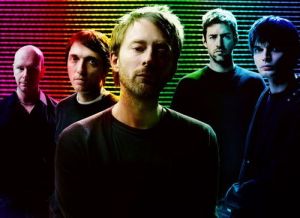

A new Radiohead album must mean a new “war” with Spotify.
[youtube https://www.youtube.com/watch?v=TTAU7lLDZYU&w=560&h=315]
As soon as A Moon Shaped Pool was made available on Sunday evening, there was much furrowing of brows, chewing of pencils and alighting on the same point – that it wasn’t available on Spotify. Apart from the first two singles. So, in fact, 18% of the album is on Spotify. But ignore that: the whole album isn’t on Spotify and, as with everything Radiohead do, this immediately took on colossal import.
<iframe width="560" height="315" src="https://www.youtube.com/embed/TTAU7lLDZYU" frameborder="0" allowfullscreen></iframe>
“In an affirmation of its principles, Radiohead boycotted leading streaming service Spotify,” trumpeted the Daily Mail. “Radiohead blackball Spotify,” thundered Music Business Worldwide, adding a personal twist: “Thom Yorke just got his own back on Spotify.”
All of this stems from Yorke pulling the Atoms for Peace album from Spotify (and other streaming services) in 2013, and then calling Spotify “the last desperate fart of a dying corpse” in an interview with the Mexican website Sopitas. It is a quote that will haunt Yorke until his own final anal emission and has become the frame in which every subsequent story about him and streaming is presented.
There is a reductive narrative being conveyed here. As with the continual recycling of the Blur/Oasis “battle” from two decades ago, there is a keenness to dial up the truculence. In one corner is Thom “Smasher” Yorke from Oxford. In the other corner is Daniel “Crusher” Ek from Stockholm. They are not just fighting each other, they are fighting for the very future of the music industry. Or something. It’s akin to the sketch from The Day Today in which Chris Morris goads the Australian foreign secretary and a minister from the British Foreign Office into military action over a trade disagreement. “That’s it!” Morris roars, relishing the imminent conflict. “Yes! It’s war!”
Except in this case, it’s not a war. It’s not even a playground dust-up. It’s a band, as is their right, choosing where to put their music. For now, A Moon Shaped Pool is only available to stream on Apple Music and Tidal, two services that recently locked down exclusives with, respectively, Drake and Beyoncé. So the Radiohead album is only a semi-exclusive. All of the band’s other albums, with the exception of In Rainbows, are on Spotify, so that confuses their “principles” somewhat. It’s less of a blackball and more of a very light grey or hard to distinguish from white-ball.
[youtube https://www.youtube.com/watch?v=TTAU7lLDZYU&w=560&h=315]
As soon as A Moon Shaped Pool was made available on Sunday evening, there was much furrowing of brows, chewing of pencils and alighting on the same point – that it wasn’t available on Spotify. Apart from the first two singles. So, in fact, 18% of the album is on Spotify. But ignore that: the whole album isn’t on Spotify and, as with everything Radiohead do, this immediately took on colossal import.
<iframe width="560" height="315" src="https://www.youtube.com/embed/TTAU7lLDZYU" frameborder="0" allowfullscreen></iframe>
“In an affirmation of its principles, Radiohead boycotted leading streaming service Spotify,” trumpeted the Daily Mail. “Radiohead blackball Spotify,” thundered Music Business Worldwide, adding a personal twist: “Thom Yorke just got his own back on Spotify.”
All of this stems from Yorke pulling the Atoms for Peace album from Spotify (and other streaming services) in 2013, and then calling Spotify “the last desperate fart of a dying corpse” in an interview with the Mexican website Sopitas. It is a quote that will haunt Yorke until his own final anal emission and has become the frame in which every subsequent story about him and streaming is presented.
There is a reductive narrative being conveyed here. As with the continual recycling of the Blur/Oasis “battle” from two decades ago, there is a keenness to dial up the truculence. In one corner is Thom “Smasher” Yorke from Oxford. In the other corner is Daniel “Crusher” Ek from Stockholm. They are not just fighting each other, they are fighting for the very future of the music industry. Or something. It’s akin to the sketch from The Day Today in which Chris Morris goads the Australian foreign secretary and a minister from the British Foreign Office into military action over a trade disagreement. “That’s it!” Morris roars, relishing the imminent conflict. “Yes! It’s war!”
Except in this case, it’s not a war. It’s not even a playground dust-up. It’s a band, as is their right, choosing where to put their music. For now, A Moon Shaped Pool is only available to stream on Apple Music and Tidal, two services that recently locked down exclusives with, respectively, Drake and Beyoncé. So the Radiohead album is only a semi-exclusive. All of the band’s other albums, with the exception of In Rainbows, are on Spotify, so that confuses their “principles” somewhat. It’s less of a blackball and more of a very light grey or hard to distinguish from white-ball.
Friday, April 22, 2016
Legendary musician Prince dies at 57
The artist’s publicist, Yvette Noel-Schure, said in a statement that he died at his Paisley Park residence in Chanhassen, Minnesota. Earlier reports had indicated that the music icon, full name Prince Rogers Nelson, was sick with the flu earlier this month and was even rushed to a hospital after his plane made an emergency landing. No cause of death was immediately announced.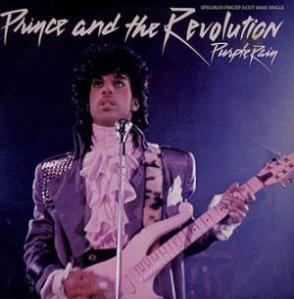

Legendary musician Prince died Thursday morning at his home. He was 57.
The artist’s publicist, Yvette Noel-Schure, said in a statement that he died at his Paisley Park residence in Chanhassen, Minnesota. Earlier reports had indicated that the music icon, full name Prince Rogers Nelson, was sick with the flu earlier this month and was even rushed to a hospital after his plane made an emergency landing. No cause of death was immediately announced.
Prince sold tens of millions of albums worldwide in a career that spanned several decades. The artist rose to superstar status with the release of his landmark album “Purple Rain.” That album sold millions of copies and spent 24 consecutive weeks at the top of the Billboard 200, in part because of songs “When Doves Cry” and “Let’s Go Crazy.”
Some reports have indicated that Prince had so much unreleased music that his estate could issue an album per year for a century after his death.
The artist famously turned out albums in quick successions during the 1990s as a way of getting out of his contract with Warner Bros., with which he had differences over both music and money.
He even appeared with the word “slave” written on his face in reference to his contractual obligations with the company. Prince went so far as to change his public name to an unpronounceable symbol because he said Warner owned the name Prince.
“It was a difficult battle, he gave up his name … There have always been artists fighting the label system, and he probably did it in the most high-profile way that anyone has ever done it before,” Alex Gale, Billboard Magazine senior editor, told CNBC. “Artists have a lot more power now, and I think they can thank Prince for that.”
Tuesday, March 29, 2016
Sony purchases Michael Jackson’s catalog for $750M
[Edit]
By Lauren Connery. CREATED Mar 15, 2016Michael Jackson’s estate recently made a deal to sell its stake in some of the world’s most iconic songs for nearly $750 million.
Some of these classic hits come from the Beatles, the Rolling Stones and Taylor Swift.
The late King of Pop bought the catalog in 1985 for $41.5 million. But because Jackson later partnered with Sony Music, they will get full ownership of the copyrights to more than three million songs.
The estate will continue to own the songs Jackson created, sources confirm.
(Video source: Inform)
Subscribe to:
Posts (Atom)